My Evening at Camp Cherokee


The theme of the day was “hospitality” and you could see and feel it all around.  Kids helping each other out.  Staff encouraging and listening to the campers or sitting with those who needed to cry for a minute.   Even I, a newcomer on the scene, was received with great hospitality.

I arrived in the sweltering heat just in time for dinner and was welcomed by Margaret Nunez, the camp’s nurse,Kelly Howington (camp director) and a number of the campers.  We enjoyed a tasty meal of spaghetti, garlic cheese bread, spinich salad, and a fabulous desert that was created by one of the campers.  I don’t know how the food disappeared (but it did), because the kids were animated and the room rang out with the sound of their chatter and laughter.  

After the dinner, the campers ran off to prepare for the evening’s activity which was “The Olympics.”   Margaret loaded up with preprations for any and all medical needs:  icebags, extra water, prescribed medications for some of the campers, bandaids, and so on.  Since it was so hot, Margaret  even helped me “break into” the camp store so that I could have a water bottle and not get dehydrated (and yes… I paid for the bottle!).  We walked up to the field to await the beginning of the games. 
The athletes approach the field

There were three countries represented:  Narnia, Cross Country, and Green Eggs and Hamistan.   The competition was fierce,there werea great displays of comaraderie, daring feats of speed and strength,and lots of cheering.  (I must have been competing as well, because  I was really hot and very sweaty – nothing like a hot night in Georgia!)

The "country" of Green Eggs and Hamistan enters the arena Rounding the curve
Around the water cooler

Because of the heat, the counselors decided that chapel would be held at the pool and that everyone would have a chance to jump into the pool beforehand.  (alas…. I forgot my swimsuit, but it’s probably just as well… this body ain’t ready for prime time!)  As the fireflies were lighting up the night air, everyone headed to the pool, waited for the lifeguards to get in place and then… the dunking began.  It looked like the kids were very refreshed and relieved to have cooled off, and they then prepared for worship. 

We sat around the pool edge and worship began, led by one of the housegroups.  As we lifted our voices in song and prayer, a steamy full moon rose over the treetops. I left with my body limp, but my heart lifted.   Thanks be to God for our faithful camp staff and volunteers! 

[Did I mention that it was HOT?]


Thinking About Denominational Division and Divorce

Well, it has happened.  Citing the recent changes in our constitution, one of our congregations has asked to be dismissed to another denomination.  Several others are considering similar moves.  Some of these are congregations in which we have made considerable investments of time, prayer, energy and money.  All of them are congregations with faithful people whom I love and cherish (even if we don’t always agree).


As much as I try to be charitable, I have to admit that my first response comes not from my rational brain and higher spiritual self but rather from my amygdala where both my fight/flight response and my emotional baggage are stored. I feel hurt and angry at the rejection, just as I did when my first marriage ended in divorce. I am offended at being labeled “unbiblical” or “non-Christian” by others; and sad at the possibility of loss.  I also wrestle with the desire for retaliation:  if someone wants to leave, then it’s gonna cost ‘em…  I want my pound of flesh! 


When I move beyond these emotional responses and try to think theologically and Biblically about denominational divorce, I am challenged to a better way. 


It is clear from scripture that maintaining unity amidst diversity is the church’s single most powerful witness to the reconciling work of Christ.  First and foremost is the prayer of our Lord on the night of his betrayal: 

‘I ask not only on behalf of these, but also on behalf of those who will believe in me through their word, 21that they may all be one. As you, Father, are in me and I am in you, may they also be in us,* so that the world may believe that you have sent me. 22The glory that you have given me I have given them, so that they may be one, as we are one, 23I in them and you in me, that they may become completely one, so that the world may know that you have sent me and have loved them even as you have loved me.’ (John 17. 20-23). 


Other important passages come from Paul, especially those that explore imagery of the church as the Body of Christ, and our relationships with one another as members of that body (see Romans chapter 12-14).  In fact, it would appear that the epistles are largely directed to issues of strife and division amongst believers in the fledgling church, with the writers exhorting them to unity in Christ and cautioning them against judging one another. 


So unity in Christ and mutual forbearance are our highest calling. When we fail in this endeavor, it is sin. Anytime there is division or schism in the body, it constitutes a massive failure on the part of everyone involved.   No matter which “side” we are on, when there is a division, all of us have failed to love one another as God has loved us.  And for this, we must ask forgiveness. 


Our failures are not the end of God’s grace or purpose.  Time and again, scripture helps us to see that God can redeem even our worst for his purposes. The book of Acts recounts how Paul and Barnabas had “a sharp disagreement” that led to their splitting up.  But even as they parted ways, the missionary efforts of the early church were not divided but multiplied!  It seems that the witness of the gospel can survive even the people of God! 


When depravity prevails and a split does occur in the church, it is all the more important that we do our best to bear witness to the gospel in the way we handle the separation.  While our feelings may drive us to seek retaliation or pay-back, I’m not sure that’s the most faithful response.  Christ’s exhortations to his followers in the Sermon on the Mount (Matt. 5.21-48) encourage us to resist retaliation and instead to embrace a generosity of spirit and material goods.  In the parable of the prodigal son we see a graciousness that does not seek revenge.  I am struck by how, despite the son’s rejection of him, the father does not resist, retaliate or debase … he hands over the inheritance freely and allows the son to depart.  When the son returns wishing to be reconciled, there is no ‘re-entry’ fee… he is welcomed back and feted as though he never left.  The father in this parable exhibits extraordinary generosity and grace… the same grace that God exhibits toward us, and the same grace that Christ tells us to exhibit with one another. 


Some will say, “But what of our investments?  Shouldn’t we be repaid?  Shouldn’t we get some return on them?”  I have come to believe that we must think of our efforts as investments in the Realm of God rather than as investments in the PC(USA)… otherwise we are flirting with idolatry.  The property, the facilities, and everything else belong first and foremost to God.  If a departing congregation is still participating in the Realm of God (even in  a form with which we differ), then perhaps it is best for us to let it go with all the assets in hand with prayers that the ministry will flourish and that Christ will be glorified. 


And so as we approach a season of division, I’m praying that we will be led more by the Holy Spirit than by the spirit of this age.  And may God forgive us our trespasses. 
 

No brag… just fact

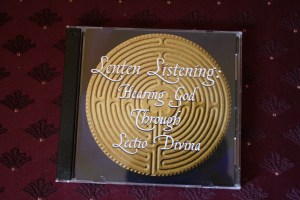
I know that pride is a sin, and it IS Lent, but I can’t help but be more than a little proud of the work done by our Spiritual Development Team.  You may remember that last year, they treated our Presbytery meeting with an experience of group Lectio Divina.  After that meeting, so many people had favorable comments, that an idea was born… why not put some of the readings on CD so that people could experience a skillfully led Lectio experience even when they could not join with others?  So… the team went to work, and now… at last… we have the first edition of the Lectio CD, featuring readings especially for Lent.   The good news is that these will be available to those attending next week’s Presbytery gathering at Westminster Pres. in Rome, GA.  And… they’re FREE!!!!!!  [If I can manage the technology, we will also get the audio files on our website so that those who can’t get to the gathering are not left out.]  So… you bet, I’m proud of the Spiritual Development.  And you should be too.      ~ Rebecca

Discussing “Community”

A brief update on the book discussion for Peter Block’s “Community:  The Structure of Belonging.”  (see post from November 24, 2010).  You are invited (along with anyone YOU wish to invite) to come to the Presbytery office on Groundhog Day (Feb 2, 2011) at 11:30 to join in conversation about this book.  Please bring your lunch with you as well as your thoughts, ideas and questions.  It’s sure to be a good time of sharing.

Shalom y’all!

Rebecca

Theology Anyone?

I’ve been pondering some things lately, and this snowy, shut-in day finally allows me the opportunity to do some writing about it.

Two comments have been on my mind:

 Comment #1:  At our September Presbytery gathering, Rev. Mickey Shealy commented that rather than spend our time discussing ordination standards, new forms of government, etc. we really ought to be talking about what Jesus has done for us. 

Comment #2:  At the General Assembly this summer, author Phyllis Tickle[1] met with the Presbytery, Synod and GA staff to share some thoughts about the “Great Emergence” that is the subject of her last book.  She commented that any great cultural shifts such as these demands that the church do some deep theological (and re-theologizing) work.  One of the most important areas that she believes we need to discuss is the nature of the atonement:  what was the cross all about?  

I don’t know how often Rev. Shealy & Phyllis Tickle find themselves on the same page, but in this instance, I would agree with both of them.  In this era of deep change in the world and the church, we need to be engaged in some deep theological reflection… and especially about the person, ministry and crucifixion of Jesus, so that the next generation may come to know Him. 

This theological task was on my mind as I begin to read again the gospel of Matthew in preparation for this year’s lectionary cycle.  As I read, I’m noticing the way that Matthew goes about the theological task of connecting the gospel of Jesus with the scriptures of the Old Testament.  Clearly for the first century Jewish people, Jesus was not at all what was expected in a Messiah… in fact, rather than work within the religious establishment, he worked around and outside of it, often challenging its leadership, traditions and practices.  And yet, despite this dis-continuity with their religious tradition,  those who walked with Him, were touched by Him, and learned from Him, knew that in Him, they had seen and been touched by God.  Matthew had the task of demonstrating that in spite of this radical dis-continuity, Jesus also represented a radical continuity with the religious texts and traditions of Judaism.  As such, I’m thinking that Matthew was faced with much the same situation that we are, in that he was doing the deep work of theology (or re-theologizing). 

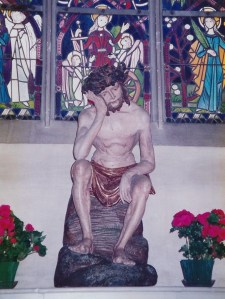
Photo by Fred Scharmen at /www.flickr.com/photos/sevensixfive/418339398

I wonder if we would be guided in our current theological task if we were to examine and imitate the ways in which Matthew interprets, re-interprets and applies the texts of the OT in order to present Jesus as the Messiah. 

I also wonder how we might make opportunities for on-going theological reflection with one another. 

 Thoughts, anyone???


[1] Tickle, Phyllis; The Great Emergence: How Christianity Is Changing and Why (emersion: Emergent Village resources for communities of faith) published by Baker Books, 2008