Since I’ve retired, I’ve had the incredible gift of having much more agency over my days… I’m not tied to somone else’s schedule, or driven by someone else’s agenda, need, expectation or desire. It can feel quite luxurious. It can also feel quite uncomfortable. In this fallow time, I have become more sharply aware of something I only suspected previously. So much free time brings a kind of anxiety. When facing a day void of necessities or activity, I am seized with a bit of a panic; an almost primal fear of the void that lies in emptiness. I have a whole arsenal of tactics that I use to avoid, dodge, or numb the need to face the emptiness in myself. I use activity, snacking, reading, listening to music, shopping, surfing the internet, eating/drinking to excess, etc.
Jesus said “Whoever wants to be my disciple must deny themselves and take up their cross daily and follow me. For whoever wants to save their life will lose it, but whoever loses their life for me will save it. What good is it for someone to gain the whole world, and yet lose or forfeit their very self? (Luke 9:23-25 NIV)
It is true that we must die to ourselves in order to find our true self/life in the heart of God, so I’ve begun to realize that these many mechanisms that I use to avoid coming face to face with myself are nothing but avoidance of a kind of death. The invitation of Christ is for us to die to our false selves in order that we might rise with him to our whole or “very” selves. So, upon recommendation of a friend in Seattle, I decided to undertake a 10-day course in Vipassana Meditation. Ten days of silence and meditation. A time to get to the “bottom” of myself and see what is there.
Vipassana Meditation is an apophatic method [that is to say that it does not make use of focusing on images, words (mantras), personages/dieties, etc.], but rather, focuses on the natural breath and the transient sensations in one’s body.
Before I share the results of this experience, I think it is important to share some of the “rules” that we had to observe. These are taken from the “Code of Discipline” for Vipassana courses (for a more thorough description and list of rules, you can go to www.patapa.dhamma.org)
Noble Silence
All students must observe Noble Silence from the beginning of the course until the morning of the last full day. Noble Silence means silence of body, speech, and mind. Any form of communication with fellow student, whether by gestures, sign language, written notes, etc., is prohibited.
Students may, however, speak with the teacher whenever necessary and they may approach the management with any problems related to food, accommodation, health, etc. But even these contacts should be kept to a minimum. Students should cultivate the feeling that they are working in isolation.
Separation of Men and Women
Complete segregation of men and women is to be maintained. Couples, married or otherwise, should not contact each other in any way during the course. The same applies to friends, members of the same family, etc.
Physical Contact
It is important that throughout the course there be no physical contact whatsoever between persons of the same or opposite sex.
Yoga and Physical Exercise
Although physical yoga and other exercises are compatible with Vipassana, they should be suspended during the course because proper secluded facilities are not available at the course site. Jogging is also not permitted. Students may exercise during rest periods by walking in the designated areas. [Truth to tell, I did manage to do some exercise in my room and on the walking trail… recalling all those prison movies where the inmate is doing push-ups on their cell floor!]
Religious Objects, Rosaries, Crystals, Talismans, etc.
No such items should be brought to the course site. If brought inadvertently they should be deposited with the management for the duration of the course.
The Precepts
All who attend a Vipassana course must conscientiously undertake the following five precepts for the duration of the course:
to abstain from killing any being; [thankfully, it was not mosquito season!]
to abstain from stealing;
to abstain from all sexual activity;
to abstain from telling lies;
to abstain from all intoxicants.
THE COURSE TIMETABLE
The following timetable for the course has been designed to maintain the continuity of practice. For best results students are advised to follow it as closely as possible.
My Experience and Observations
 Silence is Easy: Vipassana is Hard
I totally enjoyed the experience of Noble Silence. It was liberating to NOT have to navigate social encounters or manage my social awkwardness. [I am not comfortable initiating conversations; and once in a conversation, I don’t know how to make a graceful exit…] Whew!
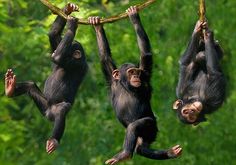
That said, while I really enjoyed the outer silence, inner silence was much more difficult to manage. My mind wanders easily. They call this “Monkey Mind.” As it turns out, I have a whole tribe of mind monkeys… no wonder I’m so comfortable with outer silence… I have so many interior playmates!
Even when I was able to corral most of the monkeys, I found it very hard to keep myself in the present and in my body. My “natural” orientation is to the future and I prefer a holy trance or an experience of the third heaven (2 Corinthians 12:2) to being embodied.
I kept recalling the old coffee table book from my high school days, “Be Here Now” by Ram Dass. That was (and is) the challenge. Silence is easy. Focus, presence and incarnation are hard. This experience with Vipassana helped me take some steps towards focus, incarnation and presence in the here and now.

Impermancence and Attachment
One of the chief goals of Vipassana is to develop equanimity and to become comfortable with the impermanent nature of things. The Buddhist understanding is that one experiences suffering because one is “attached” to things. Being attached means being overly emotionally invested or identified with something and/or having a craving or aversion to things. Vipassana teaches us that we can focus on the sensations in our bodies and practice equanimity by not reacting to any of them, realizing that they each rise and pass away. Day 5 was the day that the concept of attachment was explored, and it was on this day that the wedding ring that Wayne gave me broke. Hmmmmm
 Buddhism
Each evening, there would be a discourse by the teacher. The subject matter related to the technique of Vipassana but also to the philosophical underpnnings of Buddhism. I knew a bit about Buddhism, but these lectures gave me a much deeper understanding of at least this school of Buddhism (which they claim is the “purest” form… sound familiar?)
From what I heard, I would say that Buddhism has much in common with Christianity, though there are some significant differences. I’ve been pondering how I would explain my Christian faith to the Vipassana teacher using his terminology. Their belief that there is a deep vibration at the heart of reality comports with our own… we call it the perichoretic dance of the Trinity. Where we differ is that (at least as far as I can tell), Buddhists believe this Ultimate Reality to be a-personal or impersonal and indifferent while my belief is that Ultimate Reality is personal (Trinity) and deeply passionate, bringing all to wholeness with love, mercy and grace. The Buddhist emphasis on the cycle of life-death-new life (impermancence) is the same pattern we see in scripture (life-death-resurrection; creation-fall-redemption, etc.). The concepts of impermanence and rejecting attachment made me think a lot of Qohelleth (the book of Ecclesiastes)… “vanity, vanity; all is vanity.”
In addition to the personal and passionate nature of reality, I would say that another main difference in our traditions has to do with the nature of wholeness. Buddhist teaching is quite individualistic and merit based, placing the burden of “salvation” on the individual and the individual alone. I see isolation/lonliness as one of the chief wounds of creation (in addition to suffering), and one of the things I most treasure about the Christian tradition is the communal nature of Ultimate Reality (Trinity), salvation (Ultimate Reality/dhamma became flesh and dwelt among us, taking up and redeming the collective Karma of creation) and wholeness (people in whole relationship with Trinity, with one another and with creation).

Would I do it Again?
I will most certainly maintain the practice of seated, silent meditation, though it won’t be for the 9 hours per day that I sat at the retreat center. I am aiming for 30 minutes morning and 30 minutes at night. But, I cannot commit to another week at the center, and not by my own rules, but by theirs. Their rule is that if one wants to come for further training, one must give up other practices,such as Reiki and formal religious ritual. And I am not willing to give up my Christian practices nor my healing prayer (Reiki) practice.
So, I have learned some wonderful tools for meditation, had a great intro to Buddhism and have returned very relaxed. I will carry these gifts with me into the future.


 Thoughts & Images from the Heart